When severe weather or an emergency situation hits a rural community, reliable communication becomes more important than ever.
Residents need access to information, emergency responders need to coordinate, local governments need to communicate with the public, and businesses need to understand when they can safely reopen. At the same time, utilities may be working around the clock to assess damage and restore essential services.
Connectivity plays an important role in keeping all of those moving parts connected. While no communications network can be completely protected from a major disaster, well-designed fiber infrastructure can help communities prepare for emergencies, maintain critical communications, and recover more effectively when disruption occurs.
Building resilience before an emergency happens
Emergency preparedness starts long before a storm appears on the forecast.
For utilities and communities, that means understanding where critical infrastructure is located, identifying potential vulnerabilities, and putting systems in place that allow teams to respond quickly when something goes wrong.
Fiber networks can support that preparation by connecting facilities, systems, and teams across large service territories. Utilities can use connected tools to monitor infrastructure and share information, while local governments and public safety organizations can rely on high-capacity connectivity for day-to-day operations and emergency planning.
When those systems are already part of normal operations, they can be put to work immediately when an emergency occurs.

What happens to fiber during severe weather?
Fiber optic cable has some useful characteristics when it comes to severe weather. Unlike copper infrastructure, fiber transmits information using light and isn't susceptible to electromagnetic interference. It also doesn't corrode in the same way as metal-based cabling.
Resilience and ease of repair isn't determined by the cable alone. Network design, construction standards, redundancy, maintenance, backup power, and restoration planning all contribute to how effectively a network performs during and after an emergency.
Power outages and fiber connectivity
One common misconception is that because fiber carries information using light, an internet connection will automatically continue working during a power outage.
The reality is more nuanced.
Fiber itself doesn't require electricity to carry the optical signal along the cable, but the equipment that operates the network does. Equipment at network facilities and at the customer's premises needs power, which means backup power planning is an important part of network resilience.
For electric cooperatives, this is particularly relevant. Broadband and electric operations can be planned with an understanding of the same rural territory, infrastructure, and restoration challenges. During widespread outages, coordinated planning can help teams prioritize critical sites and understand where communications and power restoration needs overlap.
Residents also need to understand that even if the wider fiber network remains operational, their home internet equipment will usually need a backup power source to stay online during an outage.
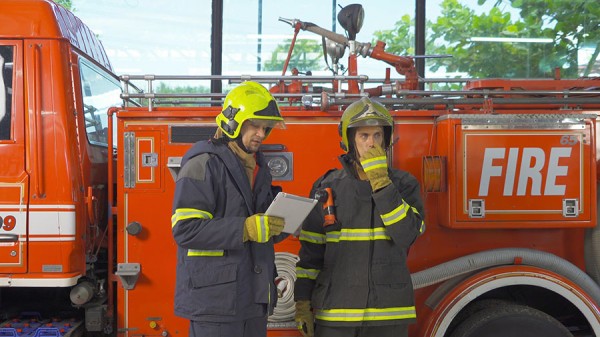
Keeping emergency services connected
During an emergency, information needs to move quickly.
Emergency responders may need to communicate between different locations, healthcare providers may need access to digital records and local officials may need to share updates with residents. Public safety organizations increasingly rely on connected systems as part of their everyday operations, making dependable communications infrastructure an important part of community resilience.
Fiber's high capacity makes it well suited to supporting these data-heavy services, particularly when many organizations and users may need connectivity at the same time.
It can also provide the foundation for technologies that communities may introduce in the future, allowing emergency communications infrastructure to evolve as local needs change.
Helping utilities understand what's happening
One of the biggest challenges following a severe storm is establishing the extent of the damage.
Crews may be dealing with downed trees, damaged poles, flooded roads, widespread power outages, and communities that are difficult to reach. The faster utilities can build an accurate picture of what's happening across their service territory, the sooner they can begin prioritizing the response.
Connected systems can help information move between field crews, control centers, and other teams. Mapping, monitoring, and communications tools can provide useful information during restoration, while reliable broadband helps staff access the systems they use to coordinate work.
Fiber doesn't replace boots on the ground, but it can give those teams better access to the information they need.

Supporting the wider community during recovery
The need for connectivity doesn't end when the immediate danger has passed.
In the days following a disaster, residents may need to contact insurers, access emergency assistance, communicate with employers, or find information about local services. Schools and healthcare providers may need temporary ways of operating, while businesses are trying to contact employees, suppliers, and customers.
For rural communities, where people may already live significant distances from essential services, losing connectivity can make recovery even more difficult.
Restoring communications therefore becomes part of restoring normal life. A resilient fiber network can help residents and organizations reconnect with the services and people they rely on as the community moves from emergency response into recovery.
Designing networks with resilience in mind
There is no such thing as a completely disaster-proof network. Severe storms, flooding, wildfires, accidents, and other events can damage even well-built infrastructure.
The goal is therefore not to assume failure can always be prevented, but to design networks so risks are understood and service can be restored as effectively as possible.
That can include careful route planning, appropriate construction methods, network redundancy, backup power, monitoring, documented emergency procedures, and access to the people and equipment needed for repairs.
For electric cooperatives developing fiber networks, these decisions are part of building infrastructure intended to serve communities for decades rather than simply meeting today's broadband needs.
Building stronger, more prepared rural communities
Rural communities are accustomed to preparing for the unexpected. From severe storms and flooding to extended power outages, utilities and emergency services understand the importance of having robust plans in place before they're needed.
Reliable communications infrastructure belongs in those plans.
Fiber can provide a strong foundation for the systems communities depend on before, during, and after an emergency, while supporting everyday services throughout the rest of the year.
At Conexon, we work with electric cooperatives to plan, design, and build fiber networks around the realities of the rural communities they serve. That means considering not only speed and coverage, but reliability, long-term performance, and the role connectivity can play when communities need it most.
Talk to Conexon about building fiber infrastructure designed to support your members today and strengthen your community for the future.
Frequently Asked Questions
Does fiber internet work during a power outage?
Fiber cable doesn't require electricity to transmit an optical signal, but the network equipment and equipment inside homes and businesses do require power. Backup power can therefore play an important role in maintaining connectivity during an outage.
Is fiber resistant to severe weather?
Fiber isn't immune to storm damage, but it doesn't experience electromagnetic interference or corrosion in the same way as copper cabling. How resilient a network is during severe weather also depends on factors such as whether infrastructure is aerial or underground, network design, redundancy, and backup power.
How can fiber support emergency responders?
Fiber can provide the high-capacity, reliable connectivity that emergency responders need to coordinate across locations and access critical digital systems. When communications infrastructure is designed with resilience, redundancy, and appropriate backup power in mind, it can help public safety organizations maintain access to the information and systems they depend on when other communications may be disrupted.
How can fiber infrastructure help a community recover after a disaster?
A resilient fiber network can support recovery by reconnecting residents, businesses, utilities, healthcare providers, and local governments with the people, services, and information they need. Beyond restoring internet access, fiber infrastructure can provide a foundation for coordinated recovery efforts and help communities adapt as their connectivity needs evolve after an emergency.
Can electric cooperatives make fiber networks more resilient?
Cooperatives can incorporate resilience into network planning through measures such as thoughtful route design, backup power, redundancy, monitoring, maintenance, and restoration planning. The right approach will depend on the individual service territory and the risks it faces.