For electric cooperatives and rural internet providers, choosing the right broadband infrastructure is one of the most important strategic decisions they’ll ever make. The goal is clear: connect more people in more places affordably, reliably, and sustainably.
But when it comes to how that’s achieved, the path isn’t always so straightforward.
Fiber-optic networks and fixed wireless both promise improved connectivity for underserved regions. Both can bring internet to areas that lack cable or DSL. And both have been used in rural broadband projects across the country. But while fixed wireless may seem like a quicker or cheaper solution at first glance, the differences in technical performance, reliability, and long-term return on investment can be significant.
Here at Conexon, we believe co-ops deserve a fully informed perspective. With this in mind, here’s a detailed, side-by-side comparison of fiber and fixed wireless, based on real-world experience and engineering insight.

Reliability: weather, obstructions, and consistency
One of the biggest challenges in rural broadband is delivering reliable service in unpredictable environments. Rural areas face unique obstacles: wide open spaces, varied terrain, dense forests, and extreme weather. These factors affect how well different technologies perform.
Fixed wireless relies on line-of-sight radio signals between towers and customer equipment. That means anything that interrupts that path including hills, trees, heavy rain, even seasonal foliage can degrade performance. Signal loss, speed fluctuations, and dropouts are common, especially at longer distances from the tower.
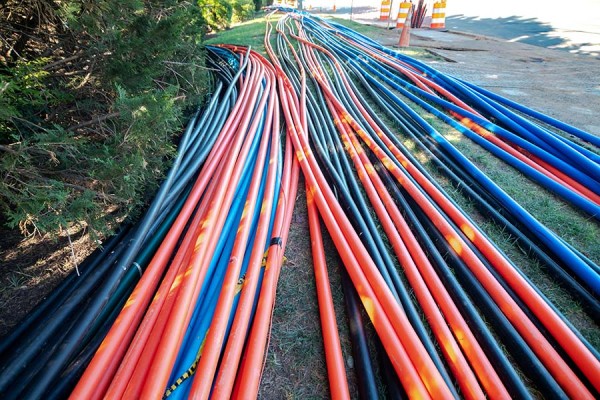
Fiber, on the other hand, delivers internet via underground or aerial cables made of glass strands that transmit data as light. It’s not affected by terrain or weather, and it doesn’t depend on clear lines of sight. Once installed, a fiber network provides a consistently strong, stable connection, regardless of external conditions.
For communities where internet reliability is tied to essential services such as telehealth, education, and public safety, that consistency can make a real difference.
Latency and Performance: speed isn’t the whole story
When most people think about internet quality, they focus on download speed. But for ISPs, and especially for today’s digital applications, latency is just as important.
Latency refers to the time it takes for data to travel between a user’s device and the server they’re accessing. Lower latency means better performance for video calls, gaming, cloud software, and real-time communication.
Fixed wireless tends to have higher latency, often in the 30–50 millisecond range or more. That may not seem like much, but in real-time applications, it can cause lags, buffering, and delays. This becomes especially noticeable when multiple users are online simultaneously, or when upload demand is high such as during Zoom meetings, remote desktop access, or file backups.
Fiber typically delivers latency in the range of 1–5 milliseconds. That low latency enables instant, high-performance connections, whether users are streaming, working, learning, or accessing cloud systems. With symmetrical upload and download speeds, fiber also handles two-way traffic more effectively, something fixed wireless can struggle to do under load.
Scalability and future-proofing
One of the main arguments in favor of fixed wireless is speed of deployment. In theory, ISPs can install towers and customer equipment quickly, often faster than building a fiber network from the ground up.
But speed of deployment doesn’t always equal sustainability. Fixed wireless systems require ongoing upgrades to stay competitive. Capacity is limited by spectrum availability, and as more users are added or demand grows, performance can degrade. Adding new frequencies or switching to newer wireless standards (like 5G) involves more hardware, more licenses, and more maintenance.
Fiber, once in the ground or on poles, can scale almost indefinitely. The fiber lines themselves can support increasing bandwidth just by upgrading the electronics at either end. This makes it inherently future-proof, ready to support gigabit, multi-gigabit, and even terabit speeds without replacing the core infrastructure.
For rural ISPs planning not just for the next budget cycle, but for the next 20 to 30 years of long-term flexibility is a major advantage.
Cost Considerations: upfront vs. total ownership
Fixed wireless is often marketed as the lower-cost option, and it’s true that the initial capital expenses can be lower. There’s no need to trench or hang cable across hundreds of miles. Towers can be built or leased, and coverage can begin quickly in a targeted area.
However, the cost of operating and maintaining a fixed wireless network over time can climb quickly. Equipment wears out. Weather damage is more frequent. Signal interference issues require technician visits. And each time performance upgrades are needed, new hardware may be required at both the base station and customer premises.
Fiber, while more expensive upfront, typically involves lower long-term maintenance costs and fewer field service calls. With no active electronics in the outside plant, and a much longer lifecycle for the physical infrastructure, fiber tends to have a lower total cost of ownership (TCO) over 10 to 20 years. Additionally, many federal and state broadband grant programs now favor fiber builds due to their longevity and reliability—making funding more accessible for co-ops who choose this route.
Maintenance and operational simplicity
Keeping a broadband network running smoothly requires ongoing support and the complexity of that support varies by technology.
Fixed wireless networks often require more frequent monitoring, calibration, and troubleshooting. Each customer connection point is an opportunity for environmental disruption or technical failure. As weather conditions, trees, and building changes shift the line-of-sight, signal strength can vary and it’s up to the ISP to manage those variables in real time.
Fiber networks are inherently more stable. Once installed, they tend to operate with minimal intervention. Outages are rare and typically due to physical line damage, which can be quickly diagnosed and repaired. Network monitoring is more straightforward, and quality of service remains consistent across all customer connections.

Final thoughts: a strategic choice for the long haul
Both fiber and fixed wireless can bring broadband to rural communities—but the choice between them isn’t just about what works today. It’s about what will continue to work five, ten, and twenty years from now.
For rural ISPs and electric cooperatives, the case for fiber lies in its consistency, scalability, reliability, and long-term cost efficiency. It provides the infrastructure not just for today’s bandwidth needs, but for whatever tomorrow brings—smart home adoption, telehealth expansion, precision agriculture, and beyond.
At Conexon, we’ve worked with co-ops across the country to plan, fund, and build fiber networks that serve their members now and for generations to come. If you’re evaluating your options, let’s talk. We’re here to guide you through the technical, financial, and strategic decisions that shape your network and your community’s future.
FAQ’s
1. What’s the main difference between fiber and fixed wireless for rural broadband?
Fixed wireless uses radio signals that require clear line-of-sight, making it vulnerable to weather and terrain. Fiber transmits data as light through cables, unaffected by environmental factors. Once built, fiber delivers consistently strong, stable connections crucial for essential services like telehealth, education, and public safety.
2. Why does fiber deliver better speed and performance than fixed wireless?
Fiber offers low latency (1–5 milliseconds) and symmetrical upload/download speeds, enabling seamless video calls, cloud access, and streaming. Fixed wireless latency is higher (30–50 milliseconds), causing lags or buffering when multiple users connect or bandwidth demand spikes. Fiber simply handles data faster and more efficiently.
3. How does fiber provide better scalability and long-term value?
Fiber networks can scale by upgrading endpoint electronics, not replacing cables. Fixed wireless faces limits in spectrum and hardware, needing costly upgrades as demand rises. For co-ops planning decades ahead, fiber’s scalability and longevity make it the more sustainable and future-proof investment.
4. Is fixed wireless cheaper than fiber in the long run?
Fixed wireless may cost less upfront but has higher maintenance and upgrade expenses over time. Weather impacts, interference, and equipment wear drive recurring costs. Fiber’s longer lifespan and lower maintenance yield a lower total cost of ownership, especially with federal funding favoring fiber builds.
5. Which technology is easier to maintain—fiber or fixed wireless?
Fixed wireless requires frequent monitoring and realignment due to weather or obstructions. Fiber is simpler to maintain, with few outages and minimal ongoing intervention. Once installed, it provides stable, low-maintenance service that supports consistent quality and easier long-term network management.